
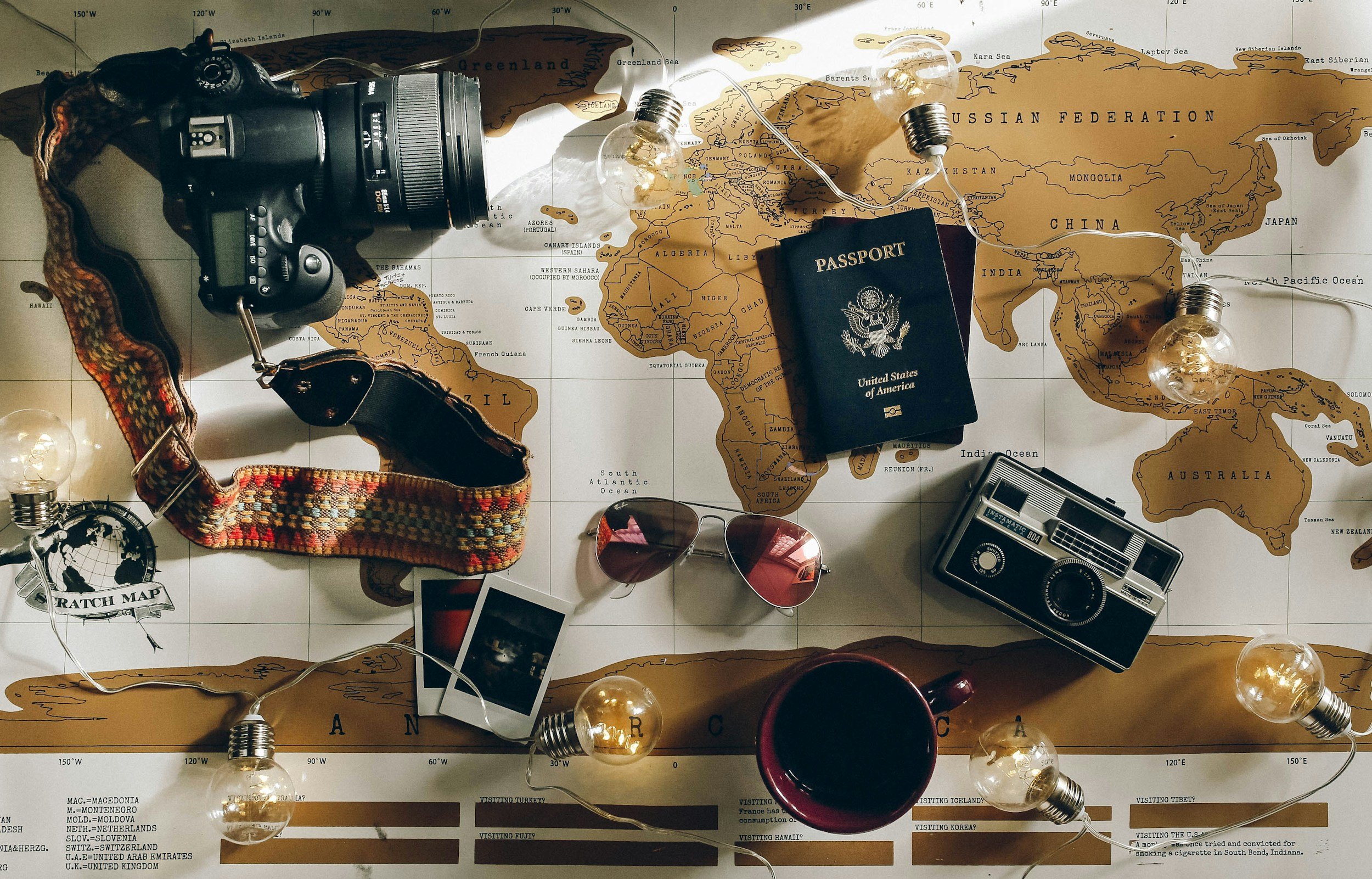
How Travel Improves Your Photography
Traveling transforms the way we see—and that transformation is the single most powerful catalyst for stronger photography.
Traveling transforms the way we see—and that transformation is the single most powerful catalyst for stronger photography. Beyond new backdrops and subjects, travel reshapes perception, sharpens technical skill, and deepens the stories a photographer can tell. Here’s why leaving familiar ground elevates your work.
Fresh visual vocabulary New places supply new shapes, textures, colors, and light. Architecture, landscape, markets, and street life present compositional elements you don’t encounter at home. Confronted with unfamiliar motifs, photographers are forced to expand their visual vocabulary—learning how to frame a tiled rooftop in Marrakech, isolate the tonal subtleties of a misty fjord, or harness neon reflections in an East Asian alley. Those visual lessons carry back into every subsequent shoot.
Heightened observational skills Travel slows you down. Without the habits and routines of everyday life, you become a deliberate observer. You study how local light changes through the day, notice gestures and interactions you would normally miss, and learn to anticipate moments. This heightened attention yields photographs that feel lived in and authentic rather than derivative.
Creative risk-taking When you’re somewhere new, risk feels less risky. The unfamiliar environment reduces the fear of failure and encourages experimentation—unusual vantage points, longer exposures, candid portrait approaches, or bold post-processing choices. Those experiments often produce unexpected successes and broaden the creative choices you’ll make back home.
Cultural empathy and storytelling Great photography is not only visual; it’s narrative and emotional. Travel exposes you to different ways of life, rituals, and values. As you learn to see context—how people inhabit their spaces and objects—you begin to build layered stories rather than isolated images. That empathy leads to work that resonates more deeply with viewers.
Technical adaptation Different environments demand technical adaptation. Shooting in high-altitude light, humid tropical air, dusty deserts, or dim temple interiors teaches practical skills—lens selection, exposure compensation, weatherproofing gear, and working with available light. Those technical competencies make you more versatile and confident.
Forcing compositional economy Travel often imposes limits—limited time, one bag of gear, crowded streets—forcing you to be selective and decisive. You learn to pare down compositions to their essential elements, which strengthens image clarity and intent. Photographers who travel regularly tend to make images with fewer distractions and clearer stories.
Building a personal archive and point of view Continual travel accelerates the accumulation of diverse reference images and experiences. Over time you begin to see recurring themes—light patterns, compositional preferences, human behaviors—that inform a coherent point of view. This archive becomes the raw material from which a distinctive photographic voice is forged.
Reinvigorating motivation and curiosity Routine can calcify creativity. Travel renews curiosity and provides fresh motivations to pick up the camera. That renewed energy often leads to ambitious projects, sustained practice, and a willingness to tackle subjects you previously avoided.
Networking and collaborative growth Travel exposes you to other photographers, artists, and local guides whose insights challenge and refine your practice. Workshops, exhibitions, and informal conversations abroad can introduce new techniques, critique, and inspiration that you might not encounter otherwise.
Returning richer, not just with images Finally, travel alters the photographer themselves. The lessons learned—about light, composition, culture, and risk—persist after the trip ends. The images you bring home are valuable, but the larger gain is an expanded way of seeing that infuses every subsequent frame.
Practical suggestions to maximize the photographic benefit of travel
Travel light but deliberately: choose a versatile kit that forces thoughtful choices.
Embrace constraints: set time-, gear-, or subject-based limits to stimulate creativity.
Learn a little language and context: cultural understanding opens access to more intimate moments.
Shoot a project, not just snapshots: a focused theme yields deeper results.
Keep a visual journal: note what draws you and why; the habit refines your eye.
Travel won’t automatically improve your photographs, but it creates conditions—novelty, challenge, and perspective—that demand growth. For photographers serious about developing a refined visual voice, travel is among the most efficient and generous teachers.
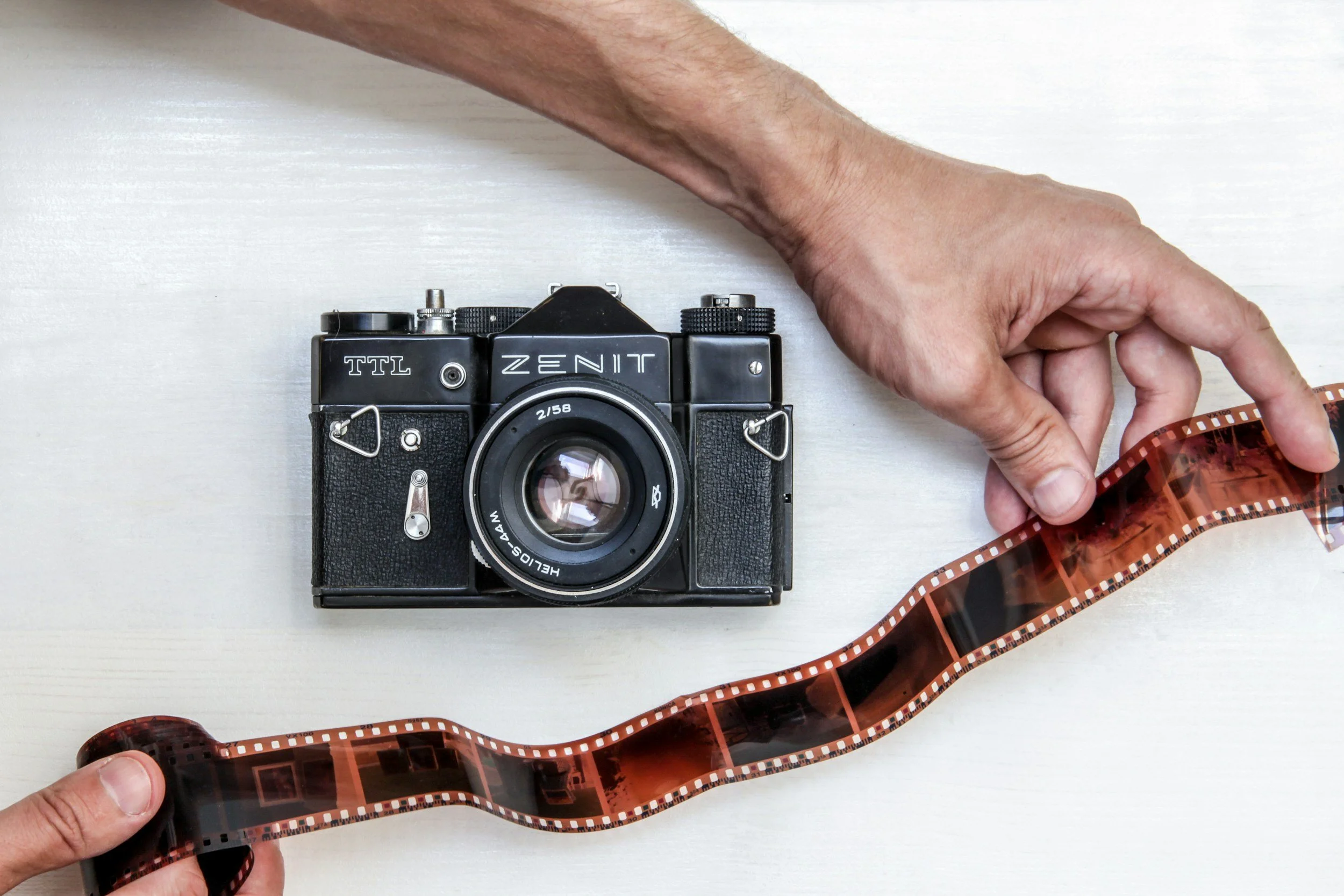
Why Photographers should try shooting analog film
The tactile patience of analog film restores a discipline and depth to photography that many digital workflows have quietly eroded. For photographers seeking a singular aesthetic, a richer creative process, and images that age with quiet dignity, shooting analog film offers distinct advantages—both technical and philosophical.
The tactile patience of analog film restores a discipline and depth to photography that many digital workflows have quietly eroded. For photographers seeking a singular aesthetic, a richer creative process, and images that age with quiet dignity, shooting analog film offers distinct advantages—both technical and philosophical. Below are the key benefits of embracing film, drawn from decades of practice and observation.
Superior tonal rendition and organic grain
Film renders highlights, midtones, and shadows with a smoothness that many digital sensors struggle to replicate. The way film compresses highlight detail and transitions through tonal ranges often results in a more pleasing, natural look—especially in skin tones and landscapes.
Grain in film is not a defect but an image character. It provides texture and nuance that can enhance mood, depth, and perceived sharpness without the harshness sometimes associated with digital noise.
Color depth and subtlety
Color negative and slide films each offer a unique palette: warm, muted, punchy, or delicate. These films capture color transitions with a level of subtle gradation and organic variation that many digital color profiles attempt to emulate but rarely match.
Film’s response to light and color often yields serendipitous shifts—slightly shifted hues or nuanced saturation—that can transform ordinary scenes into emotive images.
Dynamic range and highlight handling
Many analog stocks, particularly negative films, handle overexposure gracefully. They retain highlight detail in a way that allows for luminous images without blown-out whites.
The latitude of film can make it forgiving in difficult lighting situations, enabling recovery of detail in both shadows and highlights with more aesthetic fidelity than some digital sensors.
Deliberation fosters better composition
Film imposes constraints: limited frames per roll and the cost of processing encourage thoughtful framing, consideration of exposure, and intentionality in timing.
This deliberate practice often leads to stronger compositions, more decisive shooting, and a greater respect for light and subject—qualities that persist even when switching back to digital.
The ritual of craft
Loading film, metering by hand, developing in a darkroom—these tactile processes reconnect you to the fundamentals of photography. The ritualistic nature of working with analog can be meditative and creatively liberating.
The darkroom is an extension of the artistic process. Dodging, burning, and chemical choice are expressive tools that allow nuanced control over the final print in a way that feels intimately connected to making, not just editing.
Archival stability and longevity
Properly processed and stored negatives and slides are stable for decades and can be re-scanned or printed with evolving technologies. Film as a physical original carries provenance and a tangible legacy that purely digital files lack.
High-quality analog prints—silver gelatin, chromogenic, or archival color papers—offer longevity and material presence valued by collectors and galleries.
Serendipity and creative surprises
Film’s non-linear response to exposure, color balance, and processing variables often produces unexpected but beautiful results. These happy accidents can push your work in new directions and foster creative growth.
Limited ability to instantly review images encourages trusting intuition. The delayed gratification of waiting for development often yields a fresh perspective on what you’ve captured.
Market and exhibition value
Analog work carries prestige in many fine art and gallery contexts. Hand-printed editions, signed negatives, and unique physical artifacts can distinguish your work in a crowded market.
Collectors and curators frequently prize original darkroom prints and limited-edition analog series for their craftsmanship and authenticity.
Educational clarity
Learning on film clarifies photographic principles—exposure, reciprocity, depth of field—because there’s less automatic correction. Mistakes become lessons, and technical understanding deepens more rapidly.
Students trained in analog often develop a more disciplined workflow and a keener visual literacy that benefits any photographic medium.
Aesthetic cohesion across bodies of work
Choosing a specific film stock or processing method can create a consistent visual language across a series. That cohesion is valuable for storytelling, portfolios, and exhibitions where a unified aesthetic strengthens the narrative.
Practical considerations
Film involves costs and logistics—stock, processing, scanning, and slower turnaround. But these are investments that reward with distinct creative returns. Start with a few favorite stocks, learn development basics, and integrate scanning workflows that preserve film’s character.
Hybrid workflows (shoot film, scan, then digitally edit/print) offer the best of both worlds: analog capture with digital flexibility for final output and reproduction.
Conclusion Shooting analog film is more than a nostalgic choice; it’s a deliberate artistic decision. It shapes how you see, how you make choices, and how your images resonate with viewers. The tonal richness, tactile craft, and archival authenticity of film add layers of meaning and value to photographic work—qualities that remain compelling
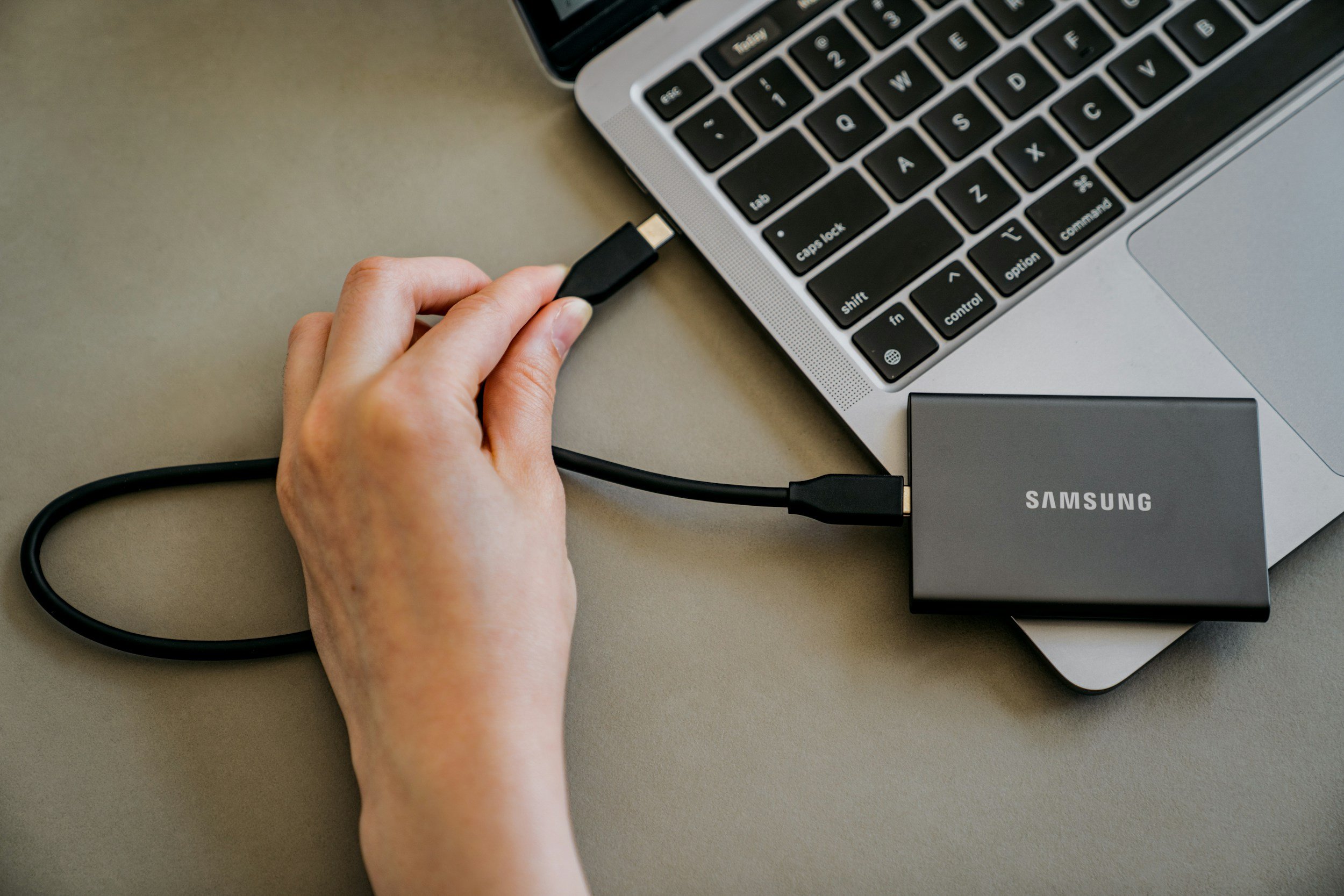
Why As A Photographer You Need To Be Backing Up Your Photos
As photographers, photos are extremely crucial to us, and if you’re not backing up your photos, you could be in for a nasty surprise
As photographers, photos are extremely crucial to us, and if you’re not backing up your photos, you could be in for a nasty surprise.
Reasons for backing up
Save Yourself from feeling depressed
Imagine that you have thousands of images, and your hard drive were to suddenly crash. Just picture the deviating emotions you would experience knowing that your photos are gone forever.
Photos are a part of who we are as photographers
Also, photos are part of who we are as photographers, so losing a photo is like losing a part of our identity.
Photos are captured moments in time
Not to mention that our photos are capturing moments of our lives that we don’t want to forget.
Don’t become a part of a horror story
I have heard of countless horror stories where people lost their entire collection of photos and were completely devastated. Do you want to be one of them?
Suggestions for backing up
I have heard it said that photographers need to be backing up their photos to at least two different locations. This could be two separate hard drives or one local hard drive and one in the cloud. Personally, I feel that the more copies of your work you have, the less chance of you losing your precious photos.
Remote Storage
Also, you might want to consider keeping one of your hard drives in a different location, such as having one at home and one at your office. In case there were to be some kind of disaster at one of those locations, you would still be able to obtain your other hard drive.
Cloud Storage
Also, it is a good idea to look into a cloud storage solution for keeping your photos backed up. One I used to use quite frequently was Shoebox, but unfortunately, they are going out of business. One of the benefits of having a cloud storage backup is that you can access it from anywhere, and that it is usually backed up to a remote location. In case a natural disaster were to hit your area, you would be comfortable knowing you at least have that cloud backup.
How to Backup
Backup Software
There are actually software programs that you can buy that mirror your hard drives, so that when you add something new to one hard drive, it gets copied to the other one as well. Some hard drives also come with free software that allows you to do this.
RAID Hard Drives
Drobo is a company that allows for RAID backups of your files but can be somewhat expensive if you don’t have that many photos or are just a hobbyist. As far as cloud backups go, the company you choose to go with will most likely have software for your computer that runs in the background for syncing your files to their cloud service.
Lightroom CC Backups
The good news is that if you’re using Adobe Lightroom CC, it automatically stores your files in Adobe’s Cloud. Note that this does not happen for the classic version of Lightroom.
Share Time
If you have found this post useful, please feel free to share and comment on this post. Also, what are some of your strategies for backing up your photos? Please feel free to share by commenting below.